



ONIX LIVING | REAL ESTATE INVESTMENT
Still think Tulum and Cancun are just for vacations? Think again.
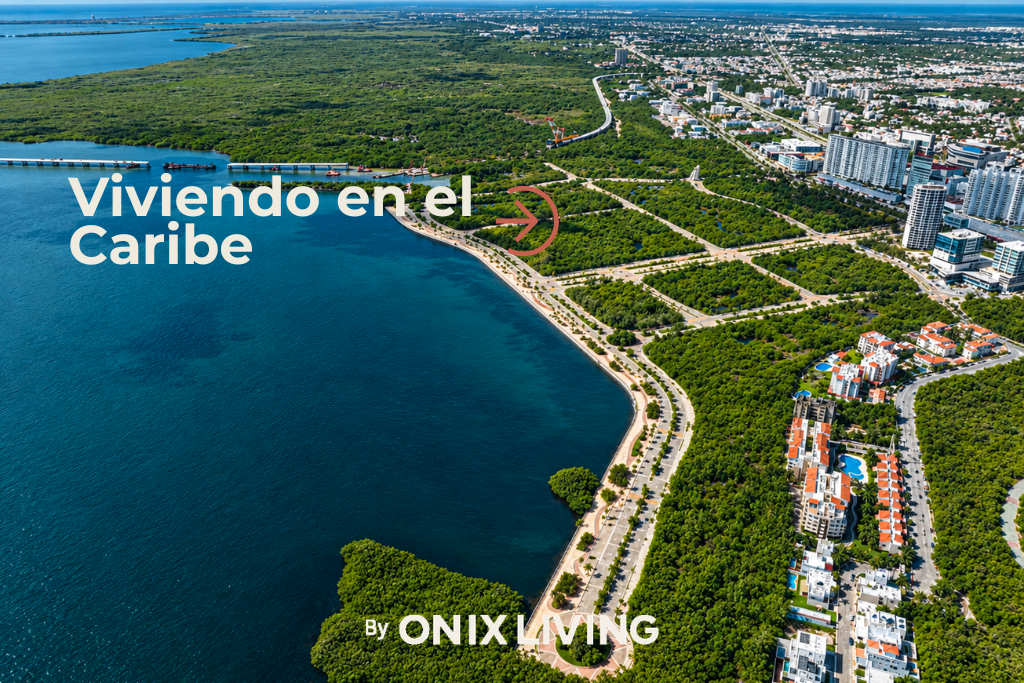
When someone hears “Cancun” or “Tulum,” they think of a week at the beach and a return flight. But behind the postcard lies a state of 2.1 million inhabitants, with big-city infrastructure and the Caribbean Sea just minutes from home.
Quintana Roo is just over 50 years old as a state and is still in full development. For those looking for a place to live, invest, or start a business, this means something very concrete: you can still get in early here.
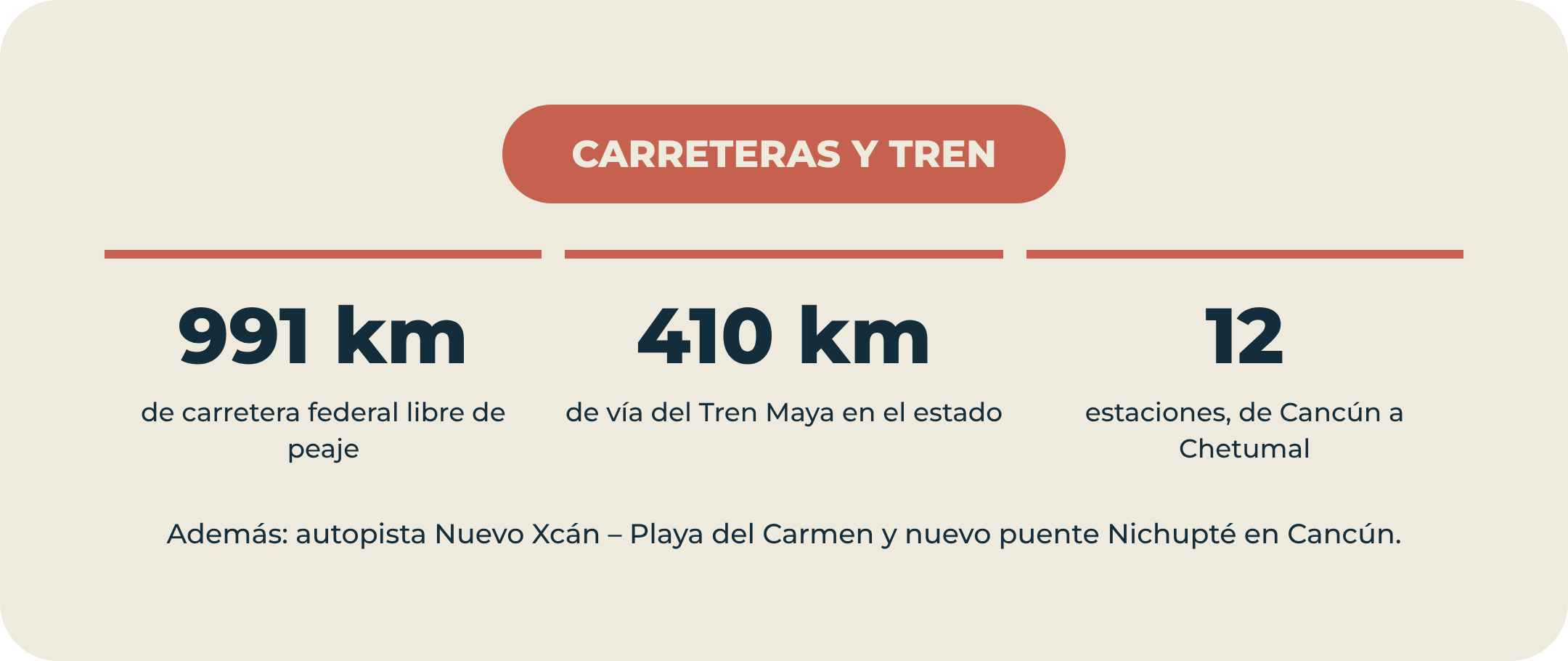
Let’s start with connectivity. Quintana Roo has four international airports: Cancun, Tulum, Cozumel, and Chetumal. Together, they handled more than 31.6 million passengers in 2025. For those who live here, this means direct flights to the United States, Canada, Europe, and Latin America without passing through Mexico City.
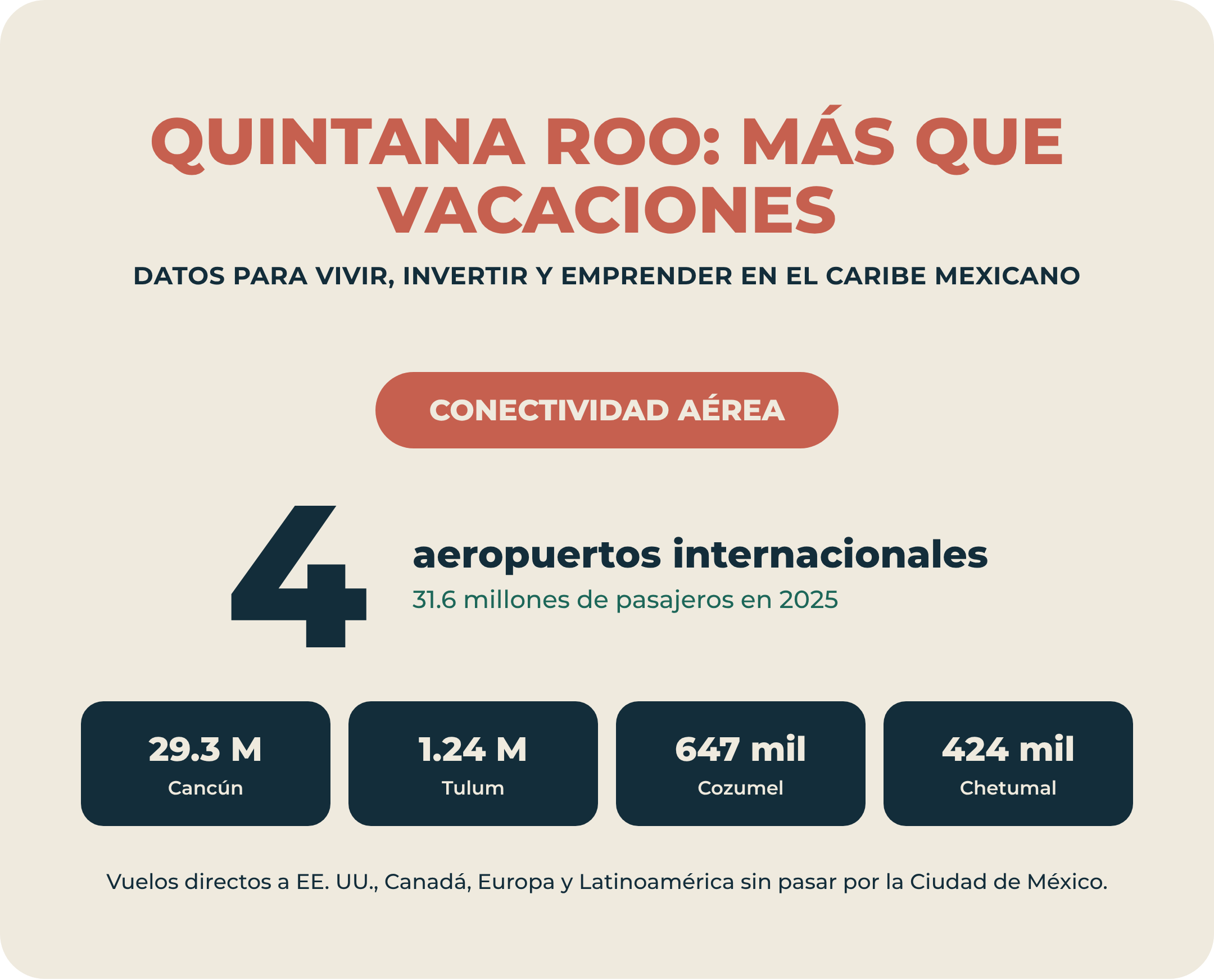
The islands are not isolated. Cozumel and Isla Mujeres are their own municipalities, and Holbox is also inhabited. All have daily maritime routes for passengers and cargo ferries that transport cars, merchandise, fuel, and materials.
Those who live on an island work, study, or go to the doctor on the mainland and return the same day. From Cancun, ferries depart for Isla Mujeres: passenger ferries from Puerto Juárez and cargo ferries from Punta Sam. From Playa del Carmen and Calica, ferries depart for Cozumel. And from Chetumal, you can even cross to Belize by boat.
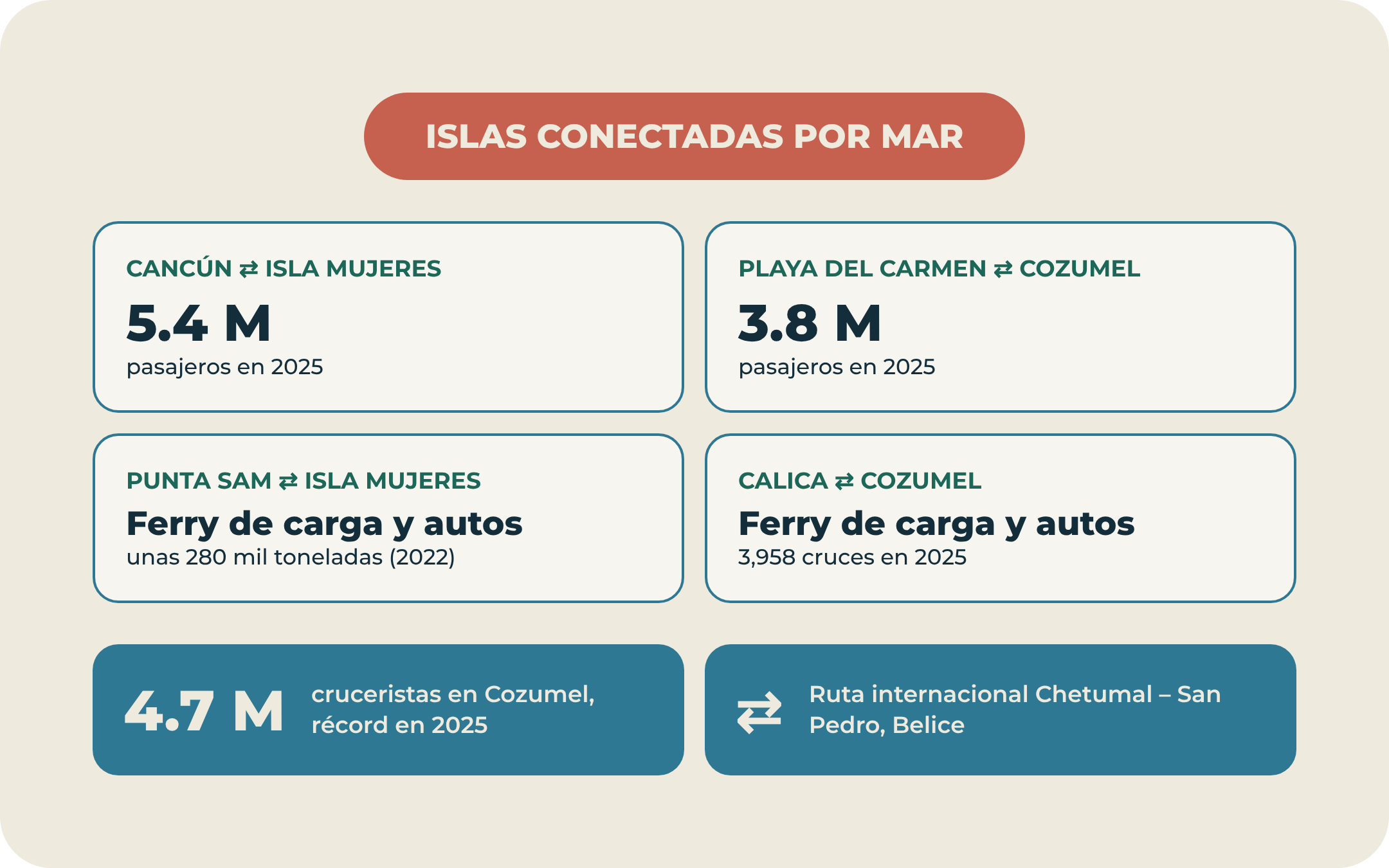
By land, the state is traversed from north to south by Federal Highway 307, from Cancun to Chetumal. It is part of a network of almost a thousand kilometers of toll-free federal highway. Added to this is the Maya Train, with 12 stations within Quintana Roo, as well as new works such as the Nuevo Xcán – Playa del Carmen highway and the Nichupté bridge in Cancun.
What makes a city livable is not the beach, but everyday essentials: where you receive care, where your children study, and where you do your shopping. Quintana Roo has private hospitals recognized among the best in the southeast, public and private universities, and department stores and shopping centers on par with any major city in the country.
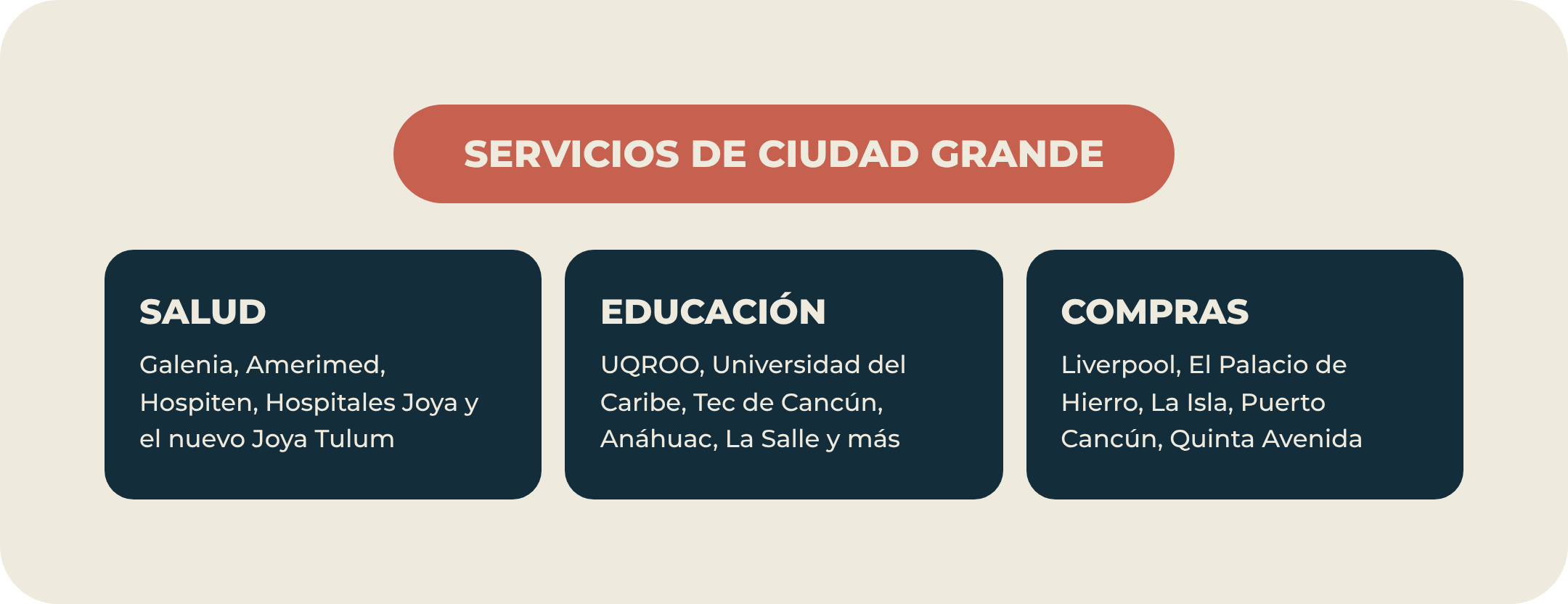
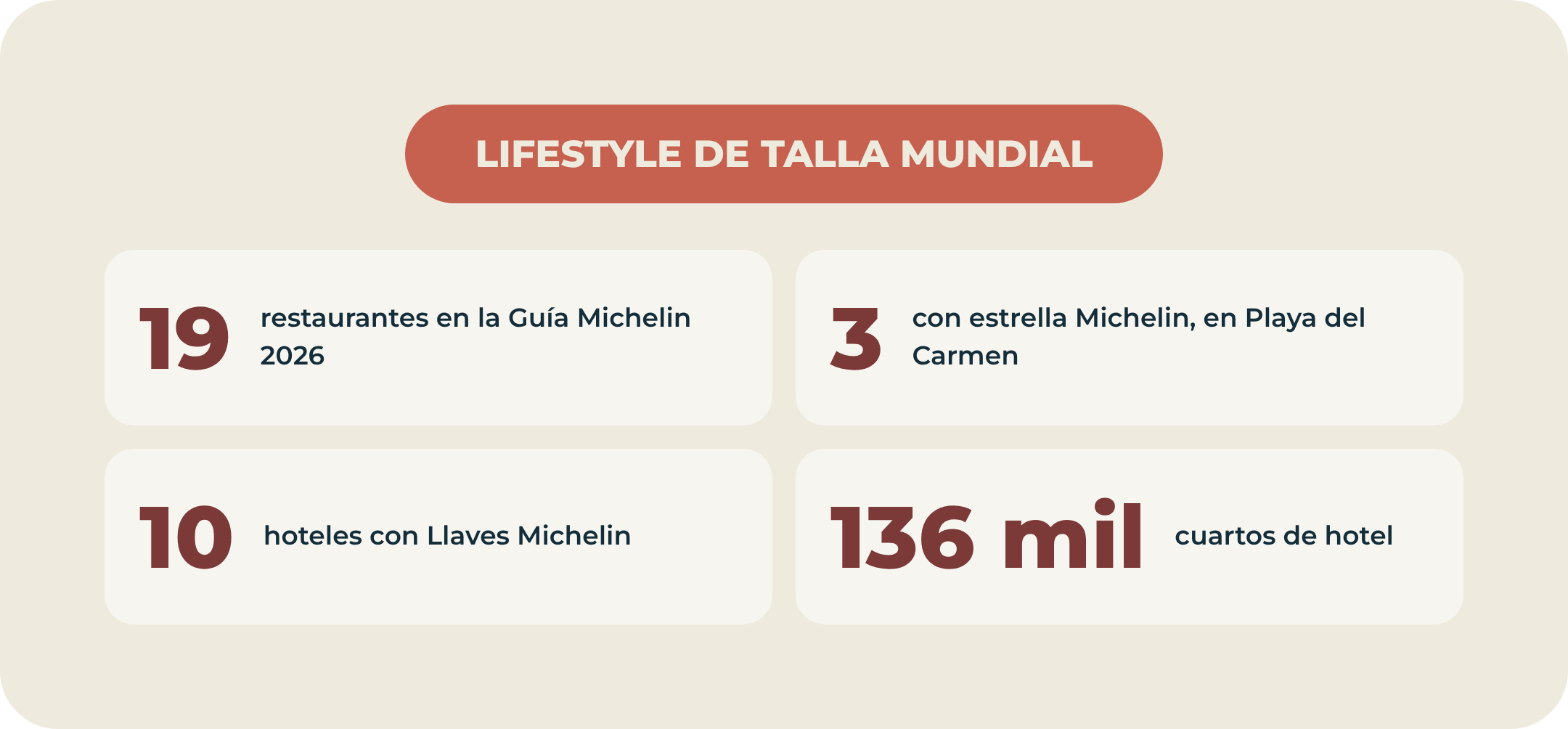
And then there’s the lifestyle. The state has over 136,000 hotel rooms and international brands like Rosewood, Banyan Tree, Fairmont, and Kempinski. The Michelin Guide 2026 features 19 restaurants in Quintana Roo, three of them with stars. Dining at a world-class restaurant or booking a luxury spa doesn’t require taking a plane: it’s minutes from home.
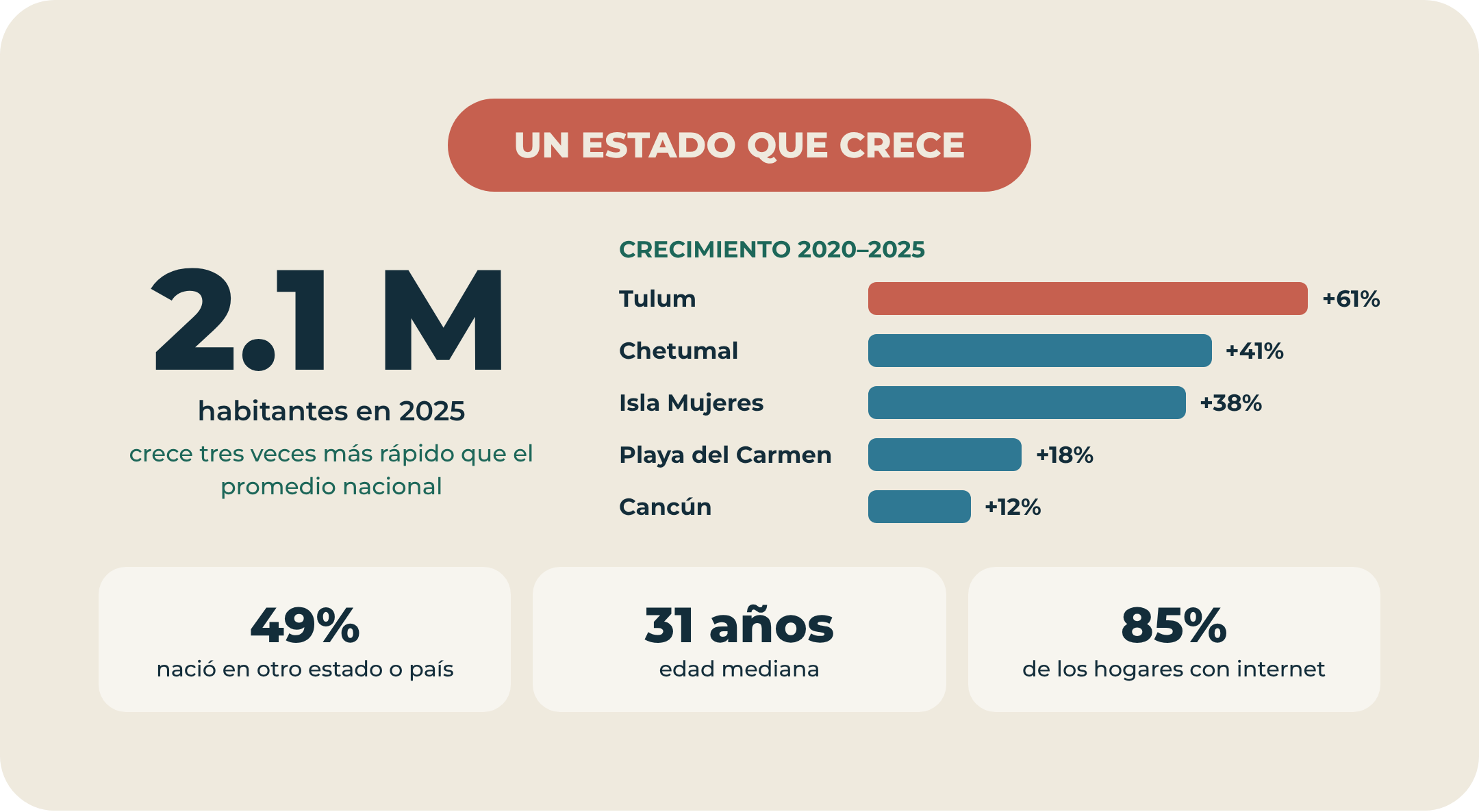
All this explains why so many people decided to stay. According to INEGI, Quintana Roo grew from 1.86 million inhabitants in 2020 to 2.1 million in 2025, growing three times faster than the national average. Almost half of its inhabitants were born in another state or another country. Tulum, the place many still see as a weekend destination, was the municipality that grew the most: 61% in five years.
Quality of life for your family, real connectivity, a moving economy, and space to start a business in a state that is still under construction. That’s why buying a property here is not just buying a vacation home: it’s investing in a legacy in one of Mexico’s most dynamic markets.
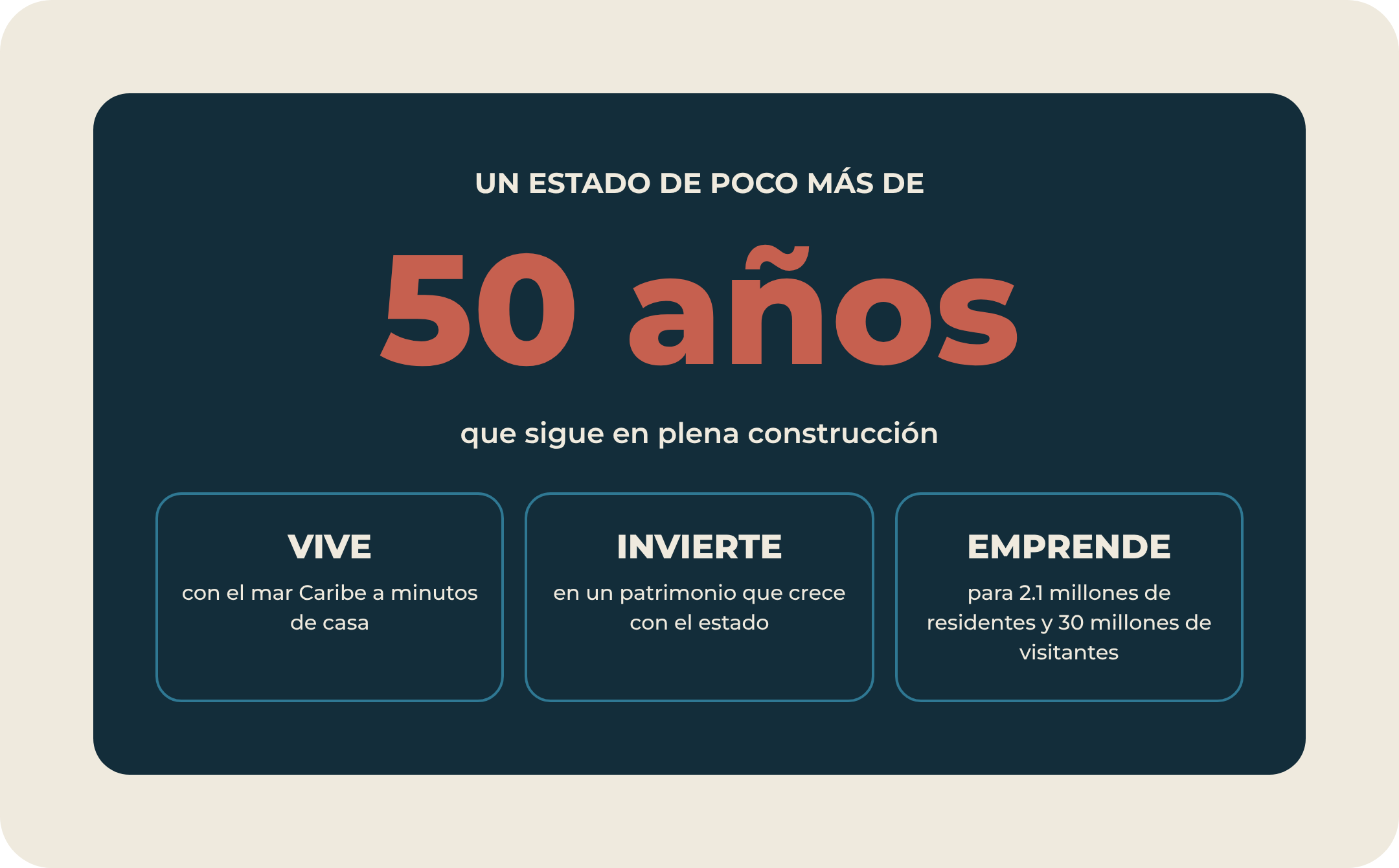
Cancun and Tulum are vacation destinations, yes. But they are also the place where you can build your home, your legacy, and your business, with the Caribbean Sea just minutes away.
Think again. And if you’re ready to take the step, Onix Living will help you find the ideal property for you and your family.
Sources
INEGI, Intercensal Survey 2025 · Airport Passengers 2025 (Por Esto!) · Apiqroo, Port Statistics 2025 · SEMAR, Statistical Yearbook of Mexican Ports · SICT, Road Conservation Program 2026 · Maya Train · Sedetur, Hotel Rooms (June 2025) · Michelin Guide Mexico 2026.